Portugal, with its stunning coastline, mild climate, rich history, and high quality of life, has long been a magnet for expatriates from all over the globe. In 2026, it continues to attract retirees, digital nomads, families, and investors alike, thanks to its relatively accessible immigration policies, although administrative processes can be slow in practice.
Whether you're an EU citizen looking to relocate within the union or a non-EU national seeking a fresh start in a European country, Portugal offers an appealing mix of personal freedom, safety, and opportunity.
This guide will walk you through all the necessary steps, documents, fees, and benefits associated with obtaining residency in Portugal in 2026, making your move as seamless as possible.
Find the perfect apartments for rent in Portugal
Understanding residency in Portugal
Residency in Portugal refers to the legal permission granted to foreign nationals to live in the country for an extended period. It is not only a requirement for long-term living but also a gateway to enjoying many rights and benefits that residents of Portugal are entitled to, such as access to healthcare, education, and employment.
Find perfect apartments for rent in Prague
Who needs a residence permit?
If you're not a citizen of an EU/EEA country or Switzerland, and you plan to stay in Portugal for longer than 90 days, you’ll need a residence permit. This permit is your official status as a resident and it must be applied for either before arrival (via a visa) or shortly after entering the country.
For EU citizens, while a visa is not required, registration with the local municipality is necessary if staying beyond three months. This process involves obtaining a Certificate of Registration (Certificado de Registo de Cidadão da União Europeia), which formalizes your right to reside in Portugal.
Difference between temporary and permanent residency
Portugal offers two main types of residency permits: temporary and permanent.
- Temporary residency is the first step for most new arrivals. It is generally valid for one year upon the first issuance and can be renewed for two-year periods afterward. As long as the applicant continues to meet the requirements—such as having stable income, adequate housing, and no serious criminal convictions—temporary residency can be extended until the individual is eligible for permanent status.
- Permanent residency, on the other hand, is typically granted after five years of continuous, legal residence in the country. This form of residency comes with fewer bureaucratic requirements and allows for indefinite stay, though it must still be renewed every five years to reflect any changes in personal information (such as address or marital status). Permanent residents enjoy nearly the same rights as Portuguese citizens, except for voting in national elections and holding certain public office positions.

Legal pathways to residency in Portugal
Portugal offers several clearly defined legal channels for obtaining residency, making it one of the more accessible countries in Europe for foreign nationals. These pathways accommodate a variety of life situations, from work and study to family reunification and investment.
Through employment
One of the most common ways to become a resident is through employment. If you’ve secured a job with a Portuguese employer, you can apply for a residence permit based on your work contract. This requires prior approval of your job offer by Portuguese labor authorities, ensuring that no Portuguese or EU national is available for the position.
Once approved, you’ll be granted a residence visa, which you can convert into a residence permit after entering Portugal. This pathway is suitable for professionals across many sectors, from IT and engineering to hospitality and healthcare.
Through study
Portugal's universities and research institutions are renowned, making them an attractive destination for international students. If you’ve been accepted into a recognized educational institution in Portugal, you can apply for a residence permit based on study.
This permit allows you to have rentals in Portugal for the duration of your academic program and may also include provisions for part-time work. After completing your studies, you may be eligible to stay in Portugal for up to one additional year to seek employment or launch a startup, under specific circumstances.
Through family reunificatio
Another pathway is through family reunification, which allows close family members of legal residents to join them in Portugal. This includes spouses, dependent children, and dependent parents. To be eligible, the primary resident must show they can support the arriving family members financially and provide adequate housing.
Once approved, family members receive their own residence permits, typically with the same duration and rights as the primary permit holder.
Through investment
Investment-based residency is another highly appealing route, especially for high-net-worth individuals. Portugal continues to offer the Golden Visa program, but real estate investments are no longer eligible. Current options focus on cultural, research, or business-related investments. However, as of 2023, this program no longer includes real estate as a qualifying option.
Instead, investment in cultural projects, scientific research, or Portuguese businesses are now the main avenues. Investors can gain temporary residency by transferring capital—typically €250,000 to €500,000 depending on the investment type—and may later qualify for permanent residency and citizenship.
Find the perfect apartments for rent in Lisbon
Residency requirements for 2026
To apply for residency in Portugal in 2026, applicants must meet a defined set of criteria that ensures their ability to integrate into Portuguese society, support themselves financially, and remain law-abiding.
The requirements vary slightly depending on whether you’re applying for temporary or permanent residency, and whether you're entering as an employee, investor, student, or through family ties.
Valid visa types
For non-EU citizens, the first step in obtaining residency is securing a valid visa corresponding to your intended purpose of stay. For shorter visits before establishing residency, travelers should also check whether their nationality requires a Schengen visa to enter Portugal. This could be a work visa, student visa, digital nomad visa, or entrepreneur/startup visa. Each visa type has its own set of eligibility criteria and document requirements. For example, the digital nomad visa mandates proof of freelance or remote income from outside Portugal, while a student visa requires an acceptance letter from a Portuguese educational institution.
Proof of funds and accommodation
Regardless of the entry route, applicants must demonstrate that they have sufficient means of subsistence. This often means showing bank statements, employment contracts, or proof of pension or other lawful income that meets or exceeds the Portuguese minimum wage, multiplied by the number of dependents.
Applicants must also provide evidence of stable accommodation in Portugal in either through a rental contract or property ownership in Portugal. These documents are essential for demonstrating self-sufficiency and integration readiness.
Find perfect apartments for rent in Portugal
Criminal background check
A clean criminal record is a non-negotiable requirement. Applicants must submit police clearance certificates from their country of origin (and any country they have lived in for more than 12 months in the past five years), as well as from Portuguese authorities.
Convictions involving prison sentences exceeding one year may result in denial of the residency application. Portuguese authorities place strong emphasis on public safety and will not approve applicants who pose a legal or social risk.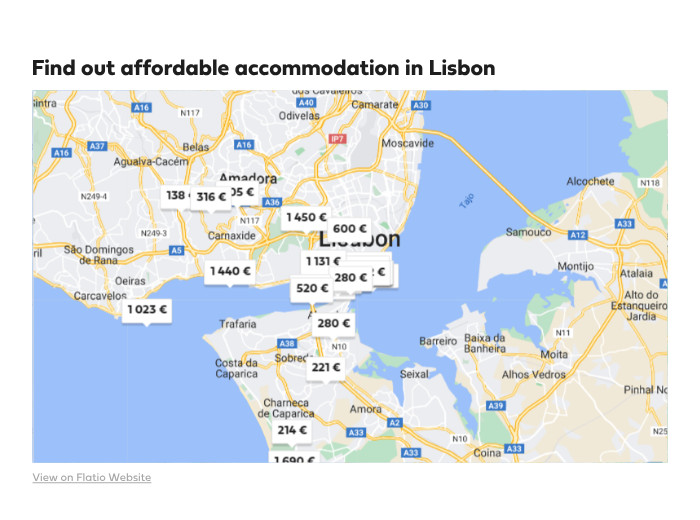
Language proficiency
For temporary residency, knowledge of the Portuguese language is not mandatory. However, for permanent residency and especially for citizenship, applicants must demonstrate basic language skills, typically by passing a certified Portuguese language test (A2 level). This ensures that residents can communicate effectively and integrate into Portuguese society. Language courses are widely available and often recommended for newcomers planning a long-term stay.
Applying for temporary residency in Portugal
Temporary residency is the standard entry point for most foreigners planning to stay in Portugal for more than three months. The process is relatively straightforward but does require careful document preparation and timely submission to avoid delays.
Required documents
To apply for a temporary residence permit, applicants must prepare and submit a bundle of essential documents. These include:
- A valid passport, with at least six months of validity remaining
- Two recent passport-sized photographs
- A visa appropriate for your purpose of stay (if applicable)
- Proof of sufficient income (e.g., job contract, bank statements, pension)
- Proof of accommodation (e.g., lease agreement or property deed)
- Health insurance valid in Portugal
- A clean criminal record certificate from your home country and Portugal
The list may vary depending on your entry category (e.g., student, investor, family reunification), so it's important to consult the official guidelines or seek legal support.
Step-by-step application process
- Visa Application: Start at the Portuguese consulate in your home country by applying for a long-stay visa.
- Travel to Portugal: Once the visa is approved, you can enter Portugal and begin the residency permit process.
- Schedule an Appointment with AIMA: After arriving, schedule an appointment with the Agency for Integration, Migration and Asylum (AIMA).
- Submit Documentation: Present all required documents, fill out the official application form, and pay the corresponding fee.
- Biometrics and Interview: Attend a biometrics appointment, where your fingerprints and photograph will be collected.
- Await Approval: If approved, you will receive a residence card valid for one year (or two years for some categories).
Validity and renewals
The initial temporary residence permit is typically valid for one year. It must be renewed before it expires—ideally 30 to 60 days in advance. If you continue to meet the eligibility criteria, your permit can be renewed for successive two-year periods.
After completing five years of continuous legal residence, you become eligible to apply for permanent residency, provided all other conditions are met.
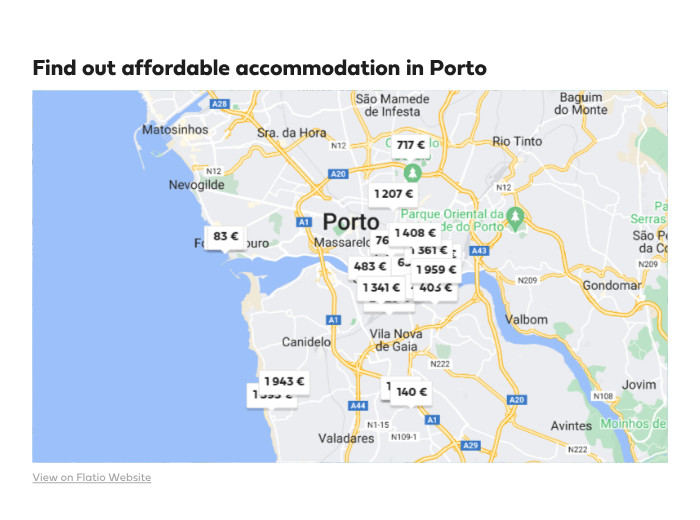
Find the perfect apartments for rent in Porto
How non-EU citizens can apply for residency
For non-EU nationals, moving to Portugal requires careful coordination of visas, financial documentation, and often legal assistance to ensure all compliance requirements are met.
Long-stay visa process
Before entering Portugal, non-EU nationals must apply for a long-stay visa at the Portuguese consulate in their home country. The type of visa—work, study, digital nomad, or investment—will dictate the documents needed and the timeline for approval. This visa allows entry into Portugal for the purpose of applying for a residence permit and usually remains valid for four months.
Health insurance and work permits
Applicants must show proof of valid health insurance that covers them for their stay in Portugal. This can be private insurance or, in some cases, EU health insurance cards for qualifying nationals. Those applying through employment must also obtain a work permit, which requires a formal job offer and confirmation that the position could not be filled locally.
Entry through digital nomad visas
Introduced in recent years, the digital nomad visa is a popular option among freelancers and remote workers. To qualify, applicants must prove a steady income earned from sources outside Portugal—usually a minimum of four times the Portuguese minimum wage. This visa allows for a stay of up to one year and can be converted into a longer-term residence permit with the right documentation and continued eligibility.
From temporary to permanent residency
Transitioning from a temporary residence permit to permanent residency is a pivotal step for foreigners who wish to make Portugal their long-term home. This transition not only ensures long-term security but also opens the door to more benefits and a potential path to Portuguese citizenship.
Conditions for eligibility
To qualify for permanent residency in Portugal, applicants must have resided legally and continuously in the country for at least five years under a valid temporary residence permit. "Continuous" does not mean the applicant cannot leave the country at all, but it does impose limits on time spent outside Portugal—typically no more than six consecutive months or ten total months during the five-year period.
In addition to the time requirement, applicants must demonstrate they have met all legal obligations during their stay. This includes paying taxes, maintaining legal employment or income, adhering to social security contributions, and avoiding criminal convictions. A clean background and compliance with Portuguese law are crucial.

Required duration of stay
The five-year stay must be lawful and well-documented. You will need to present your previous residence cards and proof that you have resided in the country without significant gaps. Documentation such as rental agreements, utility bills, or school and work attendance records may be required to substantiate your uninterrupted residency claim.
Rights and responsibilities of permanent residents
Once granted, a permanent residence permit allows you to live in Portugal indefinitely. Although the card itself must be renewed every five years, the legal status does not expire as long as conditions are met. Permanent residents can:
- Work and study without restriction
- Access public healthcare and social services
- Travel freely within the Schengen Area
- Enjoy protection from expulsion unless under exceptional legal circumstances
However, permanent residents must still inform authorities of major life changes (address, marital status) and are expected to integrate into society, including maintaining basic knowledge of the Portuguese language.
Investment-based residency options
For individuals with significant financial resources, Portugal offers residency through investment as a flexible and attractive option. Although the Golden Visa program has evolved, opportunities for obtaining residency through investment remain available under newly defined categories.
Types of qualifying investments
The current investment-based residency paths no longer include real estate purchases. Instead, investors can choose from the following legally recognized investment categories:
- Cultural Contributions: A capital transfer of at least €250,000 for the support of artistic production or the preservation of national heritage.
- Scientific Research: Investing a minimum of €500,000 into public or private scientific research institutions in Portugal.
- Business Creation and Job Growth: An investment of €500,000 to create or expand a Portuguese company, coupled with the creation of at least five permanent jobs for a minimum of three years.
Each of these paths requires documentation proving the investment has been made and maintained for the prescribed duration. Legal guidance is often necessary to ensure compliance and successful application.
Minimum Investment Thresholds
- €250,000: For artistic or heritage-based initiatives
- €500,000: For scientific research or business creation
- These investments must be verifiable through bank transfers, contracts, or formal financial statements submitted with your residency application.
Investment routes after golden visa changes
While the Golden Visa no longer covers real estate purchases, the Portuguese government continues to encourage foreign capital inflow into strategic sectors. These changes reflect the country’s commitment to sustainable and socially impactful development. Investors are advised to consult with specialized immigration lawyers to ensure their funds are directed toward eligible and compliant sectors.
Required documents for residency in Portugal
Find the perfect apartments for rent in Madeira
Gathering and submitting the correct documentation is critical for a successful residency application. The specific documents required may vary slightly depending on the type of permit being applied for, but some core items remain consistent.
Personal identification and passport
All applicants must provide a valid passport with a minimum validity of six months beyond the expected stay in Portugal. Two recent, identical passport-sized photographs are also required for the application process.
Proof of income and housing
You’ll need to show that you can financially support yourself and any dependents. Acceptable evidence includes employment contracts, bank statements showing steady income, pension records, or a letter of financial support. Additionally, a lease agreement or property deed is necessary to prove you have a place to live in Portugal.
Social security and tax records
If you're employed or self-employed in Portugal, proof of registration with the Portuguese social security system (Segurança Social) and documentation of tax contributions are required. These records verify your lawful employment and integration into the national system.
Health insurance and medical clearance
You must hold valid health insurance that covers your entire stay in Portugal. While public health insurance becomes available after legal registration, private coverage is required beforehand. In some cases, a medical certificate attesting to your general health may be requested.
Language certificate for permanent residency
For those applying for permanent residency or Portuguese citizenship, proof of basic proficiency in the Portuguese language is necessary. This is typically achieved through an A2-level certificate issued by a recognized Portuguese language school or testing center.

Fees and costs associated with residency
Applying for residency in Portugal involves a series of official fees, which vary depending on the type of permit, the applicant’s status (e.g., investor, worker, student), and the nature of the application (initial or renewal). While these fees are relatively affordable compared to other EU nations, it’s important to factor them into your planning and ensure that you retain payment receipts as they must be submitted with your application.
Breakdown of application and renewal Fees
Here’s a detailed overview of standard fees as of 2026:
| Permit Type | Fee (Online Application) |
| Temporary Residence Permit (Initial) | €82 |
| Temporary Residence Renewal | €82 |
| Permanent Residence Permit | €252 |
| Investment Permit (Golden Visa Alternative) | €6,045 |
| Investment Permit Renewal | €3,023 |
| EU Blue Card Renewal or Long-Term Residence Status Transfer | €150.70 |
| Change of Information on Temporary Permit | €38.20 |
| EU Long-Term Residence Card Issuance | €115.20 |
Please note: these are digital submission fees and may differ slightly for in-person applications or if submitted via representatives. Always confirm the latest fee schedule with the Agency for Integration, Migration and Asylum (AIMA) or a legal advisor, as costs are periodically updated.
Online vs in-person applications
Portugal’s digital immigration platform allows most residency applications and renewals to be submitted online. This method tends to be more efficient, with quicker processing times and reduced administrative hassle. Applicants will need to create an account, upload scanned documents, and submit their application electronically.
In-person applications, while still available, are typically required for biometric data collection and certain complex cases.
Dual citizenship and residency
One of the most favorable aspects of Portugal’s immigration policy is its recognition of dual citizenship. This means that once you become a naturalized Portuguese citizen, you do not need to renounce your original nationality unless required to do so by your home country.
Eligibility for dual nationality
After maintaining permanent residence in Portugal for five years, applicants can apply for Portuguese citizenship, provided they meet all the other conditions such as:
- Demonstrating proficiency in Portuguese (A2 level minimum)
- Having no serious criminal record
- Showing integration into Portuguese society (e.g., employment, community involvement)
- Being up-to-date with taxes and social security
If approved, you will receive Portuguese nationality, allowing you to hold a Portuguese passport—one of the strongest passports in the world, granting visa-free travel to over 190 countries.
Citizenship after permanent residency
Permanent residents may apply for citizenship through naturalization after five years of lawful residence. Unlike many other countries, Portugal allows these residents to retain their original citizenship. Dual nationals enjoy full civil rights in Portugal, including the right to vote in national elections and run for public office, as well as access to all EU rights, including living and working freely across other EU member states.
Portugal’s healthcare access for residents
Portugal offers a high standard of healthcare, and registered residents are entitled to access public medical services under the Serviço Nacional de Saúde (SNS)—Portugal’s national healthcare system. Whether you're applying for temporary or permanent residency, enrolling in the health system is a necessary step for full legal compliance and peace of mind.
Public vs private healthcare
Once your residency is approved, you can register at your local public health center (Centro de Saúde), where you’ll receive your unique Número de Utente (Health User Number). This number grants access to subsidized or free healthcare, including general practitioner visits, vaccinations, emergency services, and specialist referrals.
- Public healthcare: Typically very affordable, with most costs either fully covered or requiring only a nominal fee (called a “taxa moderadora”).
- Private healthcare: Offers faster service and English-speaking staff, often preferred by expats; requires separate private insurance coverage.
How to register
To enroll in the public healthcare system, you’ll need:
- Your valid residence permit
- Social security number (if employed or self-employed)
- Proof of address (rental contract or utility bill)
You’ll then be assigned to a family doctor, who serves as your first point of contact for non-emergency health issues. From here, you can be referred to specialists or hospitals within the SNS network.
Health number and insurance requirements
Even though public healthcare is accessible, private health insurance is mandatory when applying for a residence permit. This ensures coverage during the interim period before SNS enrollment. Many applicants continue to hold private insurance in addition to using public services, especially for dental care, which is not typically covered by SNS.
Find the perfect apartments for rent in Faro
Residency for students, researchers, and digital omads
Portugal’s inclusive residency options accommodate various modern lifestyles and professional pathways. Whether you're pursuing higher education, engaging in academic research, or earning a living remotely as a digital nomad, the country has tailored residency routes to suit your goals.
Residence permits for study
Foreign nationals accepted into Portuguese universities or educational institutions can apply for a student residence permit. This type of permit is typically valid for the duration of the study program and allows part-time work (up to 20 hours per week during semesters and full-time during breaks).
To qualify, students must provide:
- Proof of enrollment at a recognized institution
- Proof of sufficient financial means to cover tuition and living expenses
- Health insurance coverage
- Accommodation details (rental agreement or dormitory confirmation)
This permit is renewable annually as long as the student remains enrolled and progresses academically.
Post-study work or startup options
After completing a degree, graduates can apply for a one-year residence extension to look for employment or launch a business. This extension supports those who wish to remain in Portugal and contribute to its economy and innovation ecosystem.
Students who have studied in Portugal may transition to other residency types (e.g., work or entrepreneurship permits) without leaving the country, streamlining the process of long-term integration.
Remote work eligibility for digital nomads
Recognizing the rise of location-independent professionals, Portugal introduced the Digital Nomad Visa, officially known as the D8 visa. This visa allows remote workers and freelancers to legally reside in Portugal while working for clients or companies based abroad.
To apply, digital nomads must prove:
- A minimum monthly income equivalent to four times the Portuguese minimum wage (approx. €3,280 in 2026)
- Remote work contracts or evidence of self-employment
- Private health insurance
- Accommodation arrangements
Once approved, digital nomads receive a temporary residence permit valid for one year, renewable for up to five years. This pathway is ideal for tech professionals, consultants, writers, and creatives.
Driving license requirements for new residents
Moving to Portugal involves adapting to local infrastructure, including transportation regulations. One important step is understanding whether your foreign driver’s license is valid in Portugal or if it must be exchanged.
EU/EEA licenses
If your license was issued by a country within the EU or EEA, you can continue to use it in Portugal until it expires. However, you must register your address with the Institute of Mobility and Transport (IMT) within 60 days of establishing residence. You may also be asked to provide biometric data for record-keeping.
Countries with bilateral agreements
Portugal has signed bilateral agreements with several countries (e.g., Brazil, Switzerland, UAE, Cape Verde, and others), allowing residents to exchange their licenses without needing to retake a driving test. However, this must be done within a limited window—usually 90 to 185 days after residency is granted.

Other international licenses
If your country does not have an agreement with Portugal or is not part of the international road traffic conventions, you’ll need to obtain a Portuguese driver’s license from scratch. This means passing a theoretical and practical driving test, as well as undergoing a medical examination.
Failure to exchange or requalify for a license within the permitted timeframe may result in legal penalties or loss of driving privileges in Portugal.
Rights and benefits for Portuguese residents
Becoming a resident of Portugal comes with a host of rights and protections that ensure a high quality of life. Both temporary and permanent residents enjoy many of the same advantages as citizens, contributing to Portugal’s appeal as a relocation destination.
Education and work rights
Residents can access Portugal’s public education system, including primary and secondary schools, vocational training, and universities. Tuition fees for non-EU residents are generally higher than for nationals, but they remain affordable compared to other Western countries.
Work authorization is granted to most residence permit holders, allowing legal employment in a wide range of sectors. Entrepreneurs and freelancers are also welcome, with the option to register a business and contribute to the national economy.
Social services and tax benefits
Residents are entitled to access various social services, including unemployment benefits, pensions, maternity and paternity leave, and housing support (subject to eligibility and contributions). Portugal also has double taxation treaties with many countries, helping residents avoid being taxed twice on the same income.
Additionally, new residents may benefit from the Non-Habitual Resident (NHR) tax regime, which offers favorable tax rates on foreign-sourced income for a period of 10 years. This makes Portugal especially attractive to retirees, professionals, and business owners with international earnings.
Freedom of movement in the Schengen area
Holders of Portuguese residence permits can travel visa-free within the Schengen Zone for up to 90 days in any 180-day period. This includes popular destinations such as France, Germany, Italy, and Spain. While this does not equate to full residency rights in those countries, it offers considerable flexibility for personal or business travel.
Find perfect apartments for rent in Funchal